
The Pebble
Official Occasional Newsletter
of
The Marshall McLuhan Initiative, Inc.
Vol. II, Number 2, June 2026
The Media Ecology Association’s 27th Annual Convention is at hand!
We at the Marshall McLuhan Initiative Inc. in Winnipeg were thrilled to learn in 2024 that the MEA’s 27th Convention was designated to take place in our own fair city, the town of Marshall’s youth! The two years have flown by, but under the very capable hand of our local McLuhan aficionada, Dr. Jaqueline McLeod Rogers, the excitement is building to a crescendo. She has most graciously invited The Initiative to participate in so many ways. On June 24th, we are hosting a pre-Convention Tour of McLuhan-related sites in Winnipeg, culminating in a reception at 507 Gertrude Avenue, Marshall’s home from 1920 to 1934. (Please see our full-page advertisement in the MEA Convention Program.) In addition, The Initiative is sponsoring the Saturday morning coffee-break, dubbed “Medium Ground” by our Wiseman from the East, Jonathan Slater. Finally, our academic contributions are likewise not unsubstantial: No less than three of The Initiative’s Board members are presenting papers, as well as leading a special panel session describing the long and winding road to the acquisition of 507 Gertrude. You will find these stories and more in this, our fourth issue. Enjoy!
~The Editors
The “Welcome Home, Marshall” Bus Tour & Reception
The idea for this unique excursion developed organically from a whirl-wind tour of McLuhan sites for out-of-town guests at our 2024 Symposium entitled Winnipigeon Homecoming: McLuhan in Winnipeg 2.0.
The itinerary has since grown, and been variously named the Marshall McLuhan Magical Mystery Tour, the Winnipigeon Pilgrimage Bus Tour, and the McLuhan Trail. Whatever its appellation, the route promises to be an interesting one.
Here is the schedule:
1:30 p.m. Pick-up by bus from the old bus depot on Balmoral Street (beside the University of Winnipeg).
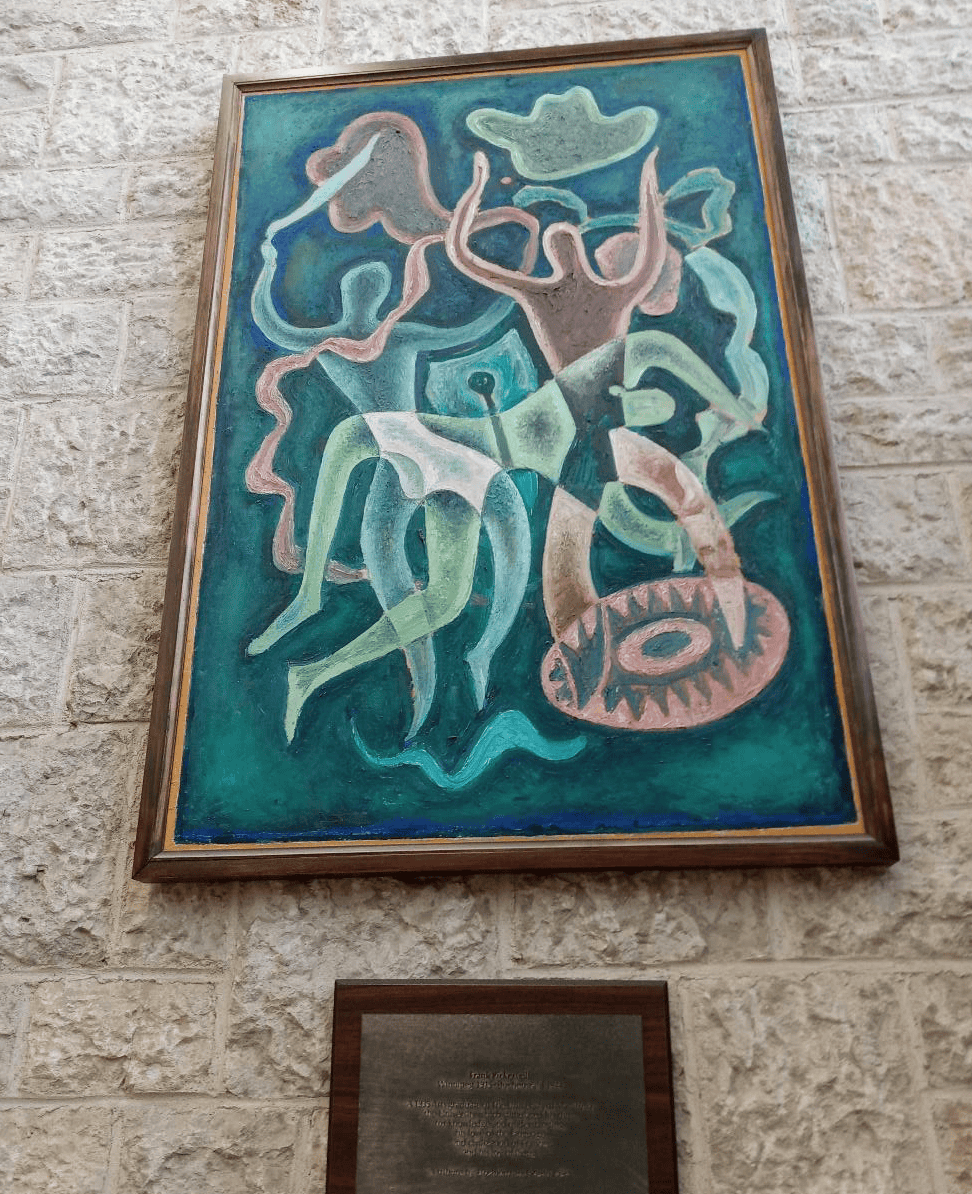
2:30 p.m. (A) The painting for Frank Herbert Dedrick Pickersgill (1915-1944) by René Cera, in the Elizabeth Dafoe Library, U. of Manitoba Campus.
3:00 p.m. (B) Marshall McLuhan Hall, Room 204, University of Manitoba Students’ Union Building, U of M Campus.
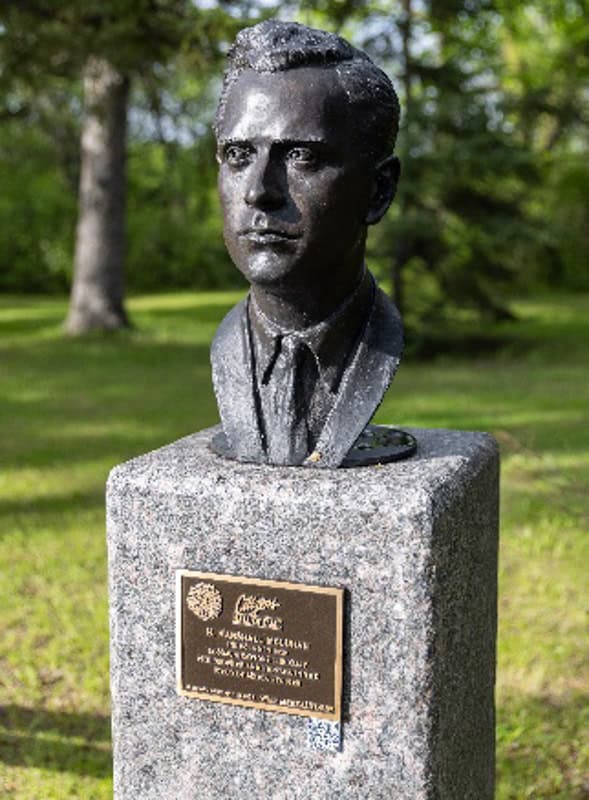
4:00 p.m. (C) The bronze bust of MM at the Winnipeg Citizens’ Hall of Fame at the Assiniboine Park (near The Leaf).
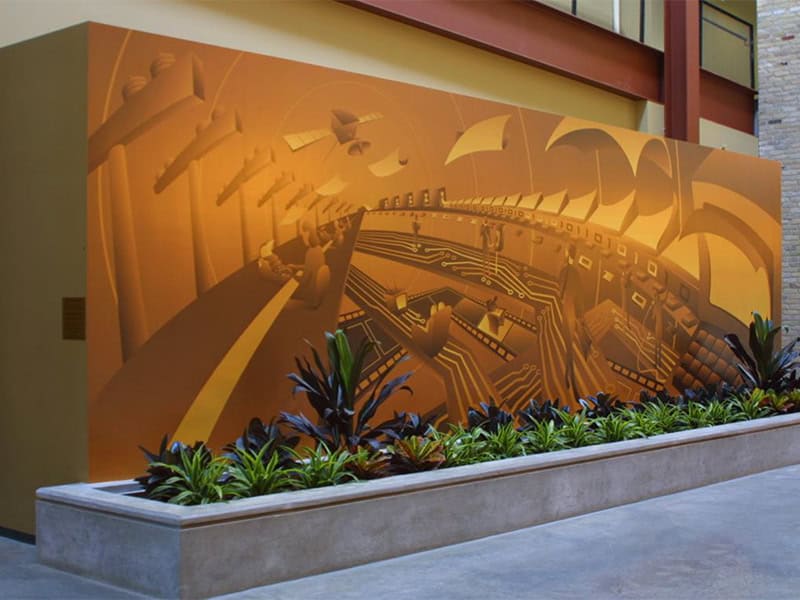
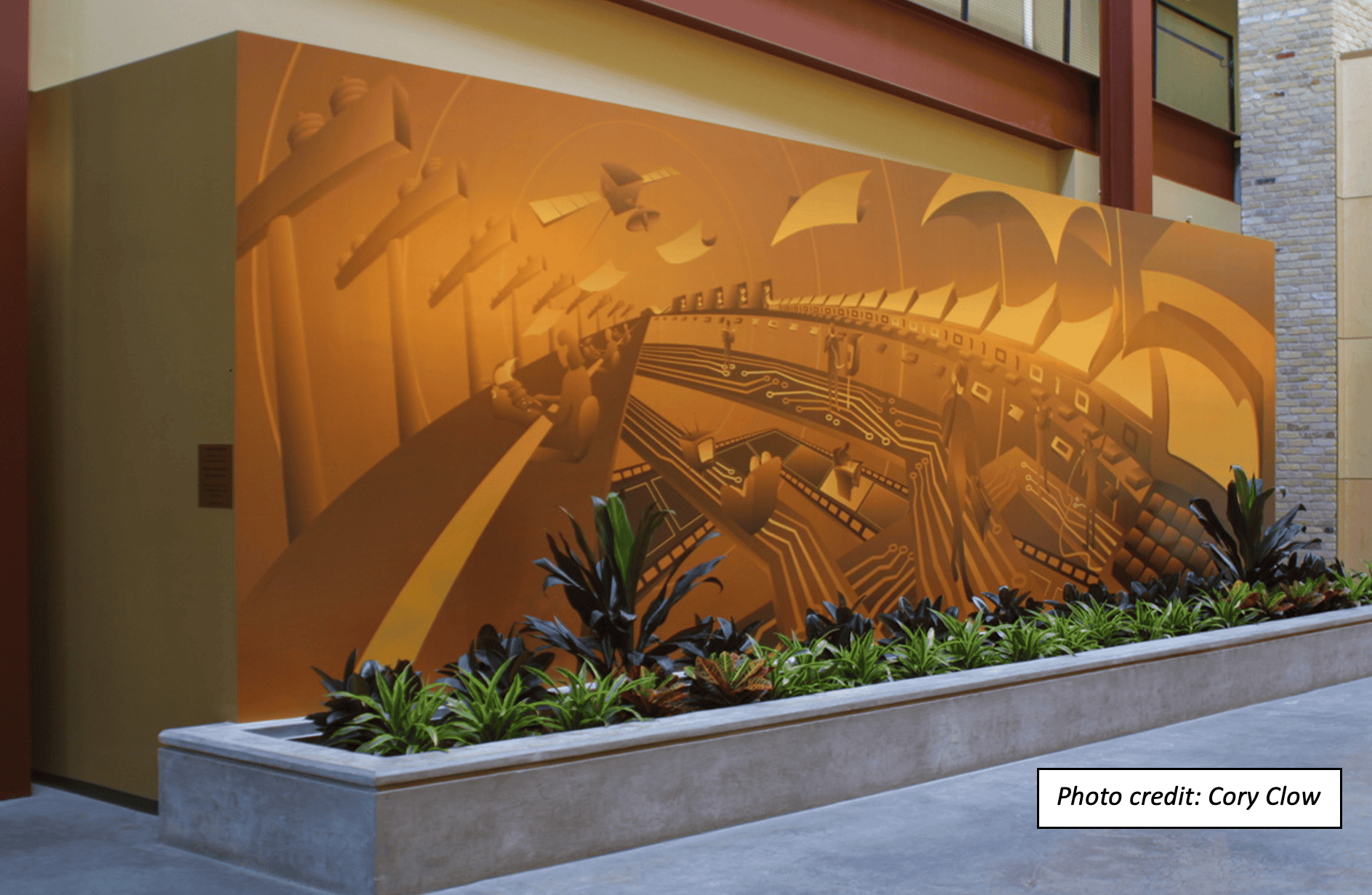
5:00 p.m. (D) “The Medium is the Message” mural in the Atrium of the Princess Street Campus of Red River Polytech, 160 Princess Street.
6:00 p.m. (E) The mural of McLuhan at Kelvin High School, 155 Kingsway.
6:45 p.m. (F) Reception at 507 Gertrude Avenue. Howard R. (J.) Engel, Executive Director of The Initiative will give words of welcome and thanks. There will be greetings to and from Dr. Jaqueline McLeod Rogers and the MEA. Rev. Prof. Krzysztof Marcynski SAC (a.k.a. “Fr. Chris”) will say grace.
7:00 p.m. Cocktails, beverages, hors d’oeuvres, platters and desserts, catered by our friendly-neighbourhood First Nations restaurant, Feast Café Bistro: http://www.feastcafebistro.com/ will be served to the guests outside in the front yard. There will be self-guided tours in the house.
7:30 p.m. Call to order again. A special announcement regarding the transformation of 507 Gertrude into The Marshall McLuhan Centre will be made. There will be an introduction of The Initiative’s first scholar-in-residence, Fr. Chris, who will give a very brief acceptance speech.
Thanks and best wishes will be given to Jaque and the MEA for a fruitful Convention.
8:15 p.m. Bus departs to go to the Duckworth Centre, 400 Spence Street, the U. of Winnipeg.
About Featured Sites on the Tour
A. Painting and plaque, Frank Pickersgill, Winnipeg 1915-Buchenwald 1944, 2nd Floor, Elizabeth Dafoe Library, Fort Garry Campus, The University of Manitoba (painting by René Alexander Paul Cera (c. 196-?)
McLuhan knew René Cera as a friend and commissioned him to paint Pied Pipers All that hung in the Coach House at the University of Toronto. Cera was born in France in 1895 and spent his youth running errands for artistic master Pierre-Auguste Renoir and sketching with Henri Matisse while training at the Nice School of Art. He moved to Toronto in 1928 to work as an architect, and stayed in Canada for more than 30 years.

Created in 1969 by Cera, Pied Pipers All is a wall-sized, psychedelic interpretation of an era in the midst of extreme technological and cultural change. Unlike many people at the U of Toronto campus at the time, Cera actually understood McLuhan’s ideas, interpreting the siren call of television as a frenzied dance of seduction and confusion.
For more info, see
https://muhangalaxy.wordpress.com/2016/09/10/rene-ceras-mural-painting-pied-pipers-all-1969-is-returning-to-st-michaels-college/.
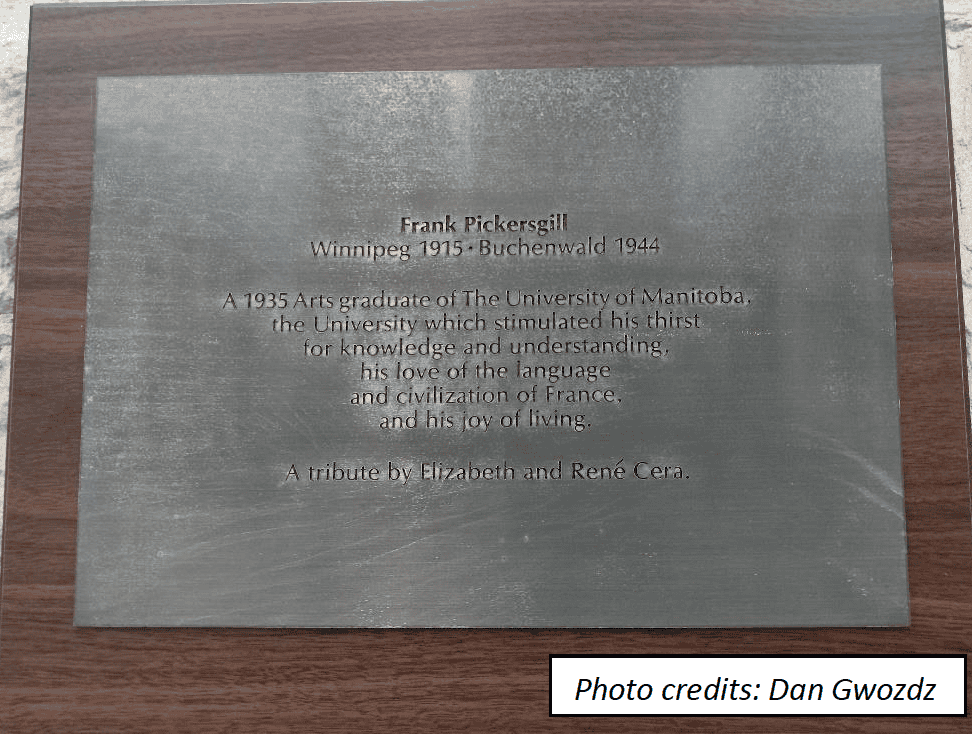
The Cera painting at the Dafoe Library honours Frank Herbert Dedrick Pickersgill (1915-1944) as a WWII hero for his ultimate sacrifice. Pickersgill was a Canadian agent of the United Kingdom’s clandestine Special Operations Executive (SOE) espionage organization in World War II. SOE agents allied themselves with the French Resistance. Pickersgill was captured by the Nazis shortly after his arrival in France, imprisoned, and later executed.
Frank Pickersgill and Marshall McLuhan had much in common. Both graduated from Kelvin (then Technical) High School in Winnipeg, Pickersgill in 1932 and McLuhan in 1928. Both earned a Bachelor’s degree in English from the University of Manitoba, the former in 1936, the latter in 1933. Both men had careers thanks to their English degrees. Finally, both alumni were well-versed in the same languages: English, French, Latin, and Greek. Interestingly, as a man of faith, McLuhan began his mornings by reading and comparing biblical scriptures across these tongues!
B. Marshall McLuhan Hall, Room 204, The University of Manitoba’s Students’ Union building, U of Manitoba (2004)
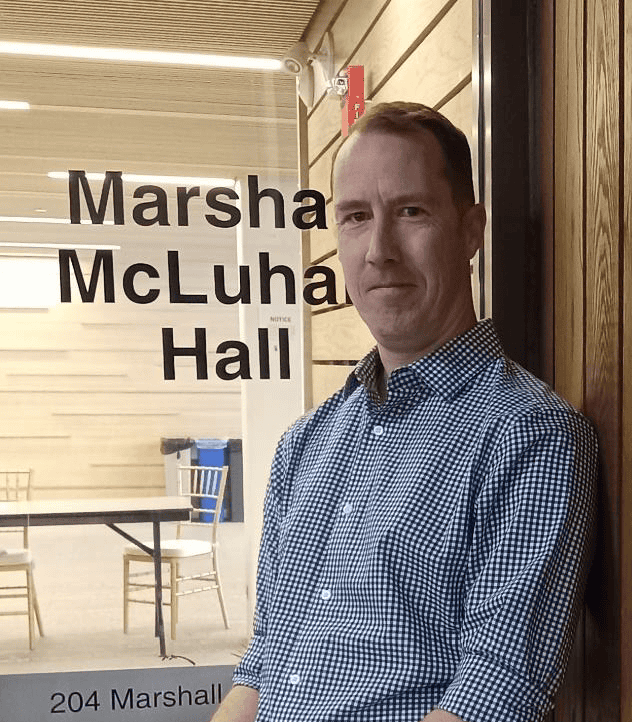
Grandson Andrew McLuhan poses in front of Marshall McLuhan Hall
This popular event venue, originally dubbed The Beausejour Room, was renamed The Marshall McLuhan Hall and dedicated in June 2004 to recognize McLuhan’s deep roots in Winnipeg.
In attendance were Eric McLuhan, Marshall’s oldest child and collaborator; and daughter Elizabeth, her husband Don Myers, and their daughter Madeleine McLuhan-Myers. Eric quipped that this was the only tribute where both of Marshall’s parents were recognized: Herbert Ernest McLuhan and Elsie Naomi Hall McLuhan, elocutionist. At the ceremony, Marshall’s children highlighted the city’s influence on his work and suggested Winnipeg as a site for a world-leading communication studies school.
Marshall McLuhan Hall serves as a lovely venue for events, lectures, and academic gatherings. Engraved on its glass walls is the classic McLuhan aphorism, “There are no passengers on Spaceship Earth. We are all crew.”
The Marshall McLuhan Initiative will be holding its first Gala Fundraiser at the Hall on October 8th, 2026. This will be an occasion not to be missed!
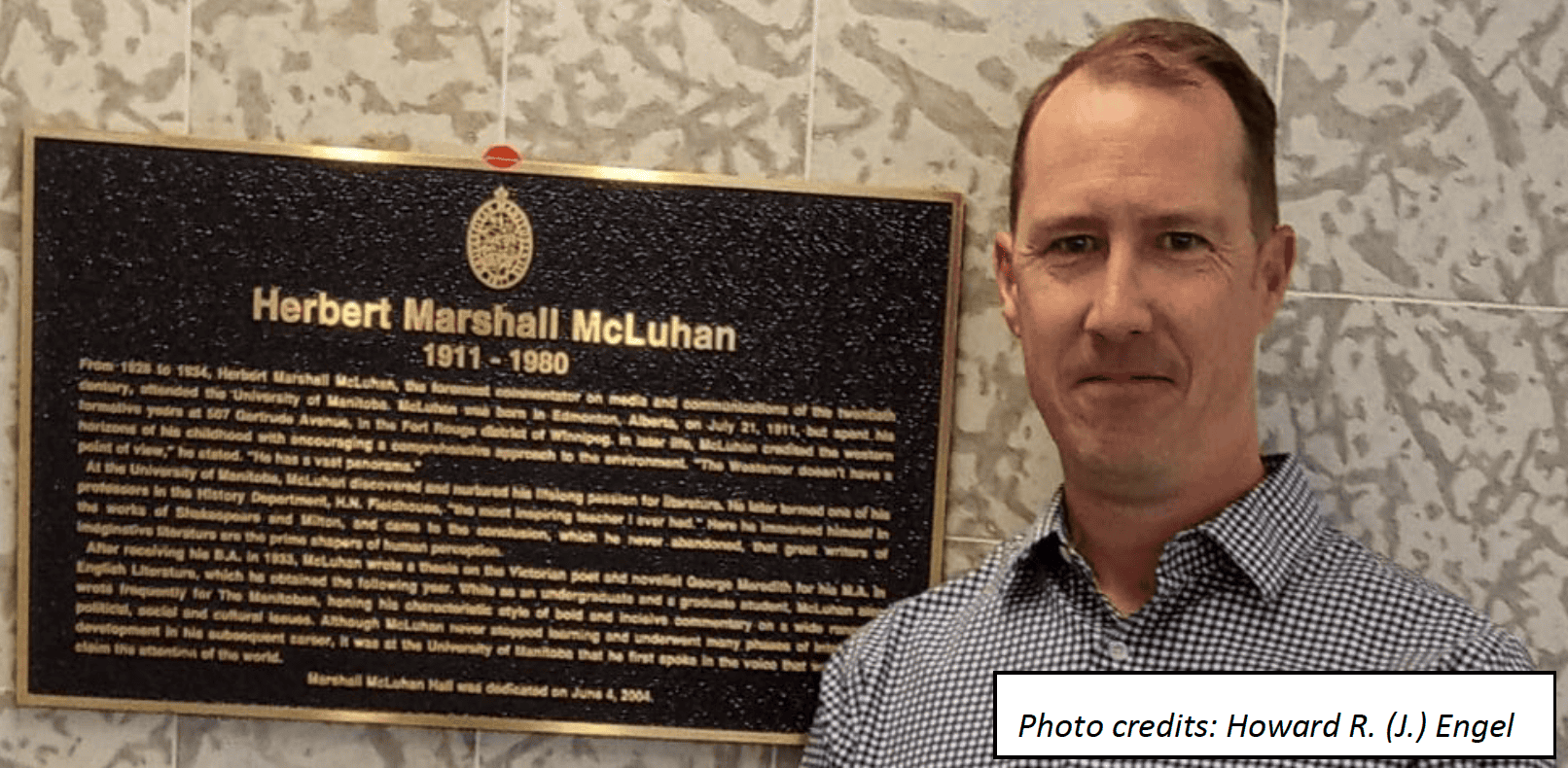
Andrew is standing beside the commemorative plaque found inside Marshall McLuhan Hall
C. Bronze bust of “H. Marshall McLuhan,” Winnipeg Citizens Hall of Fame, Assiniboine Park (2019)
Due to Covid 19, the official installation was postponed until September 23, 2021. This successful nomination of Marshall was the fruit of much desire and effort.
In 2015, during a stroll through the Citizens Hall of Fame, Torontonian McLuhan scholars and educators, Ruthanne Wrobel and her husband George, noticed that Marshall was conspicuous by his absence. Their Winnipeg hosts knew that justice had to be done!
In December 2016 Howard R. (J.) Engel, Executive Director of The Initiative, presented a dynamic and informative PowerPoint to the Winnipeg Real Estate Board to vie for McLuhan’s nomination. Judges encouraged them to try again.
For the following year’s nomination, his wife, Esther Juce, suggested that the Real Estate Board should not only hear about McLuhan, but should hear from him. This time, with a video by local MM aficionado Richard Altman, their nomination was the runner-up.
Finally, the couple realized that their task was to prove to the Board that the Winnipegger had made lasting and relevant contributions to society. After a passionate appeal to the Board that McLuhan’s legacy was an antidote to the deleterious effects of social media on their children and families, the 2019 nomination was won!
Local sculptor Madeleine Vrignon, used as her model the classic portrait of Marshall from his 1933 U of M graduation photograph and created an excellent likeness of the man. There was only one small but humorous bump along the journey: Marshall’s poofy hairstyle in the photograph did not translate well into three-dimensional art. However, Vrignon dealt with the issue quite handily, and McLuhan’s bronze bust now takes its rightful place in the Winnipeg Citizens Hall of Fame.)
D. “Medium is the Message” mural: Atrium, Red River Polytech Exchange District Campus (2004)
This 9’ x 30’ canvas was created by then RRC design student and now designer and illustrator, Cory Clow, in collaboration with Graphic Design and Creative Communications students, RRC Instructors, and the Board of Directors. In Cory’s own words:
The initial direction was to create a piece that encapsulated the history of Manitoba and the history of communication. Old telephone poles, typewriters, film, traditional illustrators, tube tvs, broadcasters with wired micro-phones, phone booths, printing presses, cell phones, computers and satellites populate his canvas.
The printing press with typewriter papers flying and morphing into the computer screen symbolize that we are moving in a direction of a paperless society, while the computer circuit boards and highways symbolize the information highway and the interchanging direction of technology.
The mural was traditionally sketched, digitally executed, printed and installed. There’s an overall message of the old and new in harmony, which is also reflected in the rebuild of this historic building in the Exchange District. Monochromatic colours were used to compliment and not take away from the beautiful architecture of the building.
The name The Medium is the Message was ultimately agreed upon and tied everything back to Manitoba and served as an immense nod to Marshall McLuhan, a certain notable and award-winning student from Winnipeg, Manitoba.
E. Multi-media mural of Marshall McLuhan: école secondaire Kelvin High School (2013)
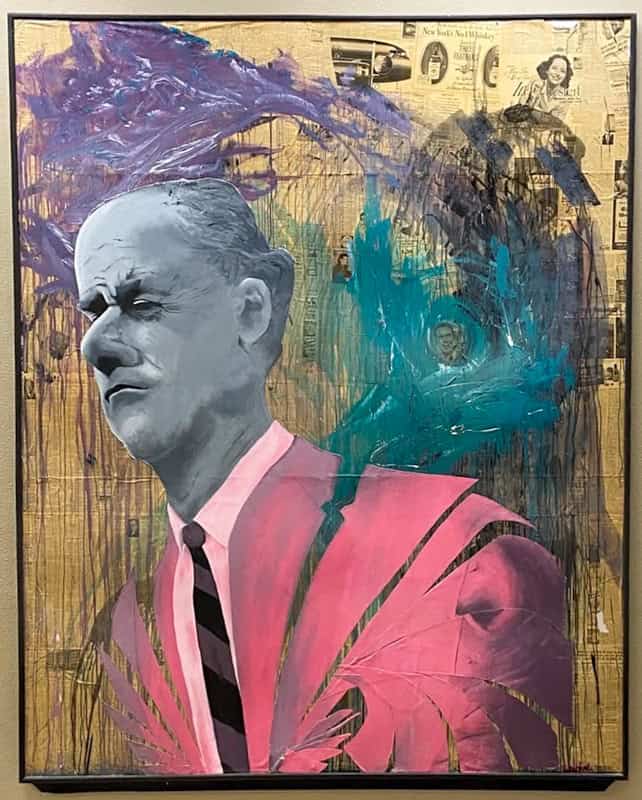
Photo credit: Jonathan Slater
A graduate of the International Baccalaureate Program at Kelvin created this stunning and monumental piece of art. It dominates the stairwell closest to the front door and main office at Kelvin High. Its vibrant colours and Marshall’s outrageous fuchsia apparel are spell-binding. This effect is intensified by the bland backdrop of old, yellowing newspaper clippings.
The crowning glory of the piece is the ashen but amazing likeness of McLuhan. The enigmatic expression on his face puts nothing but questions into the eye of the beholder: Is he imagining being on a flight on “Spaceship Earth”? Is he dreaming up yet another clever play-on-words? Or is he simply looking for the “off button”?
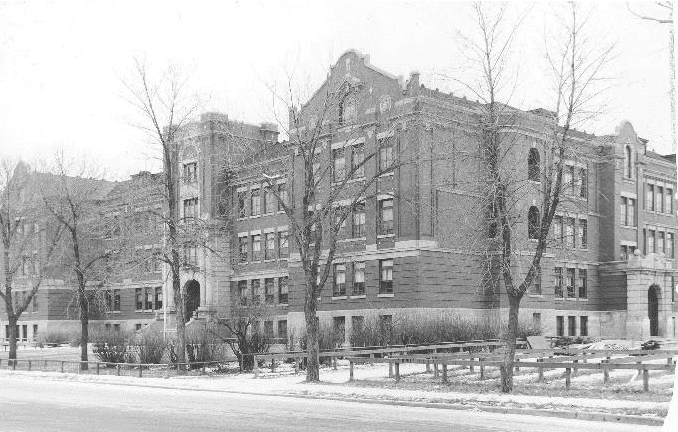
Marshall McLuhan graduated from that school, then known a Kelvin Technical High School, in 1928. The photograph of the building dates back to 1910, (courtesy of the Manitoba Historical Society).
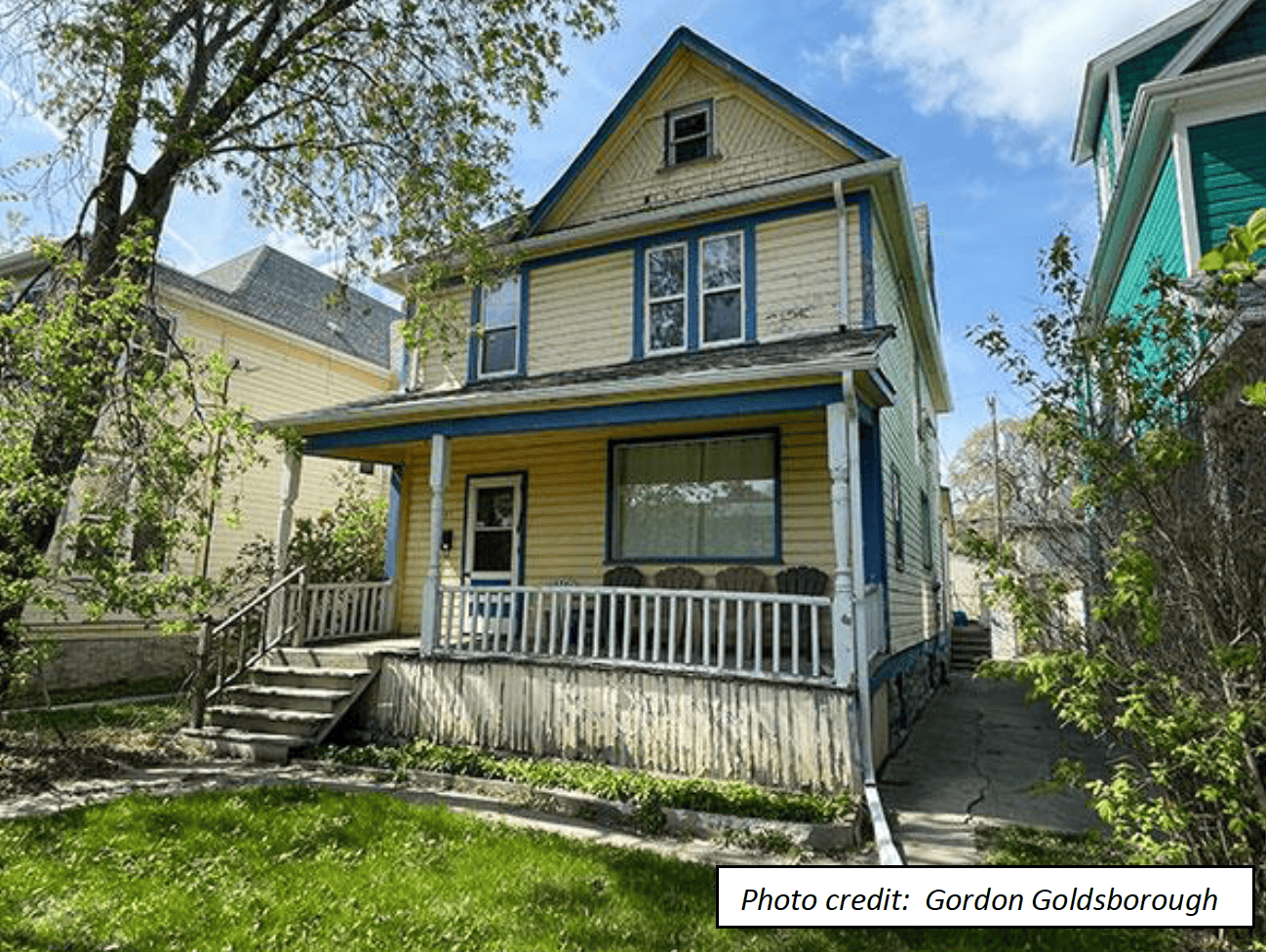
F. Marshall McLuhan’s most significant Winnipeg childhood home: 507 Gertrude Avenue (1903)
Herbert Ernest McLuhan and Elsie Naomi Hall McLuhan lived there with their two children, Herbert Marshall and Maurice (a.k.a. “Red”) from 1920 to 1934, the longest that Marshall lived anywhere in his life.
By 1935, none of the family dwelt there after Herbert and Elsie parted ways. Herbert remained in Winnipeg until 1954 as an agent of the North American Life Assurance Co.
The house was variously a single-family dwelling and a rooming house. The owners just previous to The Initiative moved there in 2003.
The Marshall McLuhan Initiative Inc. was overjoyed to have acquired the property on March 1st, 2025. Now that that dream has come true, (see The Pebble, Vol. 1, No. 1, March 2025, p. 1) the time for planning has begun. The Initiative hopes to restore the façade and our inviting “museum room”, as well as many of the features throughout the house as possible. We will be engaging a heritage architect for this aspect of our project.
We also aspire to make the house more than a museum, but rather the vibrant Marshall McLuhan Centre, which will house a library, a communications/media centre/gallery, and accommodation for a scholar-in-residence.
Providentially, even though we have not yet even begun construction, our inaugural scholar-in-residence will begin his research in July 2026! His name is Rev. Prof. Krzysztof Marcynski, (a.k.a. “Fr. Chris”), SAC professor of Media and communications at the Institute of Media Education and Journalism at Cardinal Stefan Wyszyński University in Warsaw, Poland. (See our “Polish Connection” issue of The Pebble, Vol. 1 No. 2, p. 3, July 2025.)
G. From Here Until Now: The Osborne Street Bridge art installation (2012)
The first Osborne Street Bridge in Winnipeg was built in 1882, over the Assiniboine River, and played a vital role in opening up the south side of Winnipeg to settlement and commerce. Many iterations followed over the years, culminating in the current version, which opened on October 26, 2012.
What makes today’s Osborne Bridge unique is that it is an integration of art components within the bridge structure. A collaborative effort between the Winnipeg Arts Council’s Public Art Program and the City of Winnipeg, the project was entitled From Here Until Now, suggesting the idea that by continuously recognizing its heritage, the community can live in an exciting present.
The project under the guidance of the artist/architect team spmb [São Paulo-Manitoba: Eduardo Aquino and Karen Shanski), was the product of collaborative planning and public consultation. The result was a three-fold, exquisitely creative expression of the history, geography, architecture, and village/community experiences.
The texts on the Osborne Bridge balusters consist of community-specific words and phrases, local landmarks, and architectural icons of the area, taking the form of over 100 cut-out words and illustrations interspersed across the bridge.
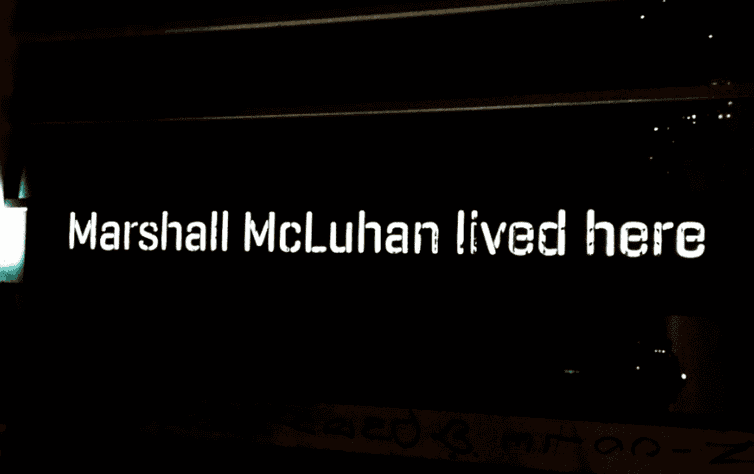
One of the few balusters to feature an individual’s name (if not the only one) reads as follows: “Marshall McLuhan lived here.” This is truly a hidden treasure, which becomes a beacon of light emanating through the darkness of night.
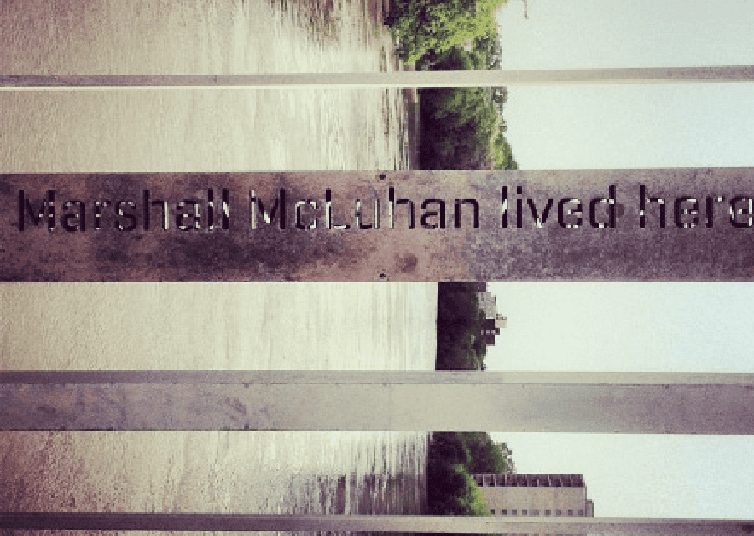
Photos credit: Jarrett Cole
H. The art installation entitled “Light Through” on the Disraeli Bridge
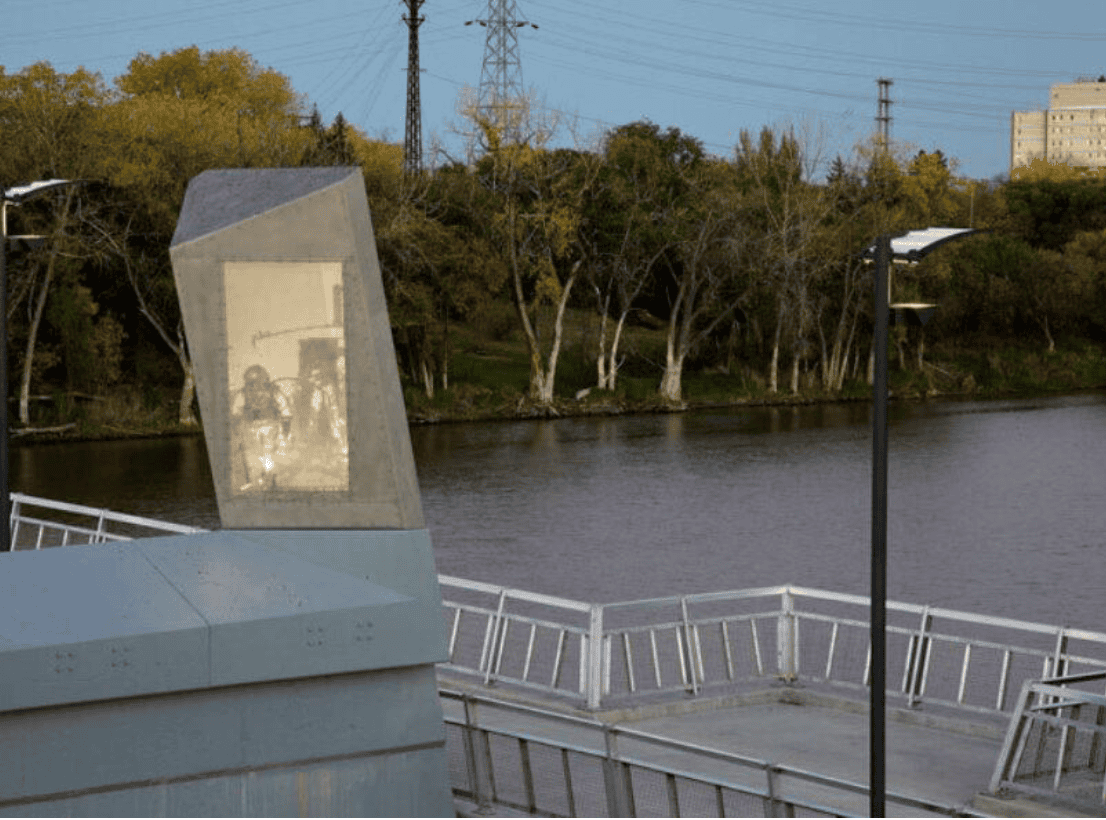
The final McLuhan-related site in Winnipeg would require a tour all on its own: the art installation entitled “Light Through” on the Disraeli Bridge. This monumental project by Winnipeg artist Bernie Miller was officially completed and revealed to the public on October 3, 2013 at the same time that the present iteration of the Bridge was opened.
This brilliant installation consists of 16 perforated stainless-steel structures covering the four piers of the Disraeli Active Transportation Bridge. When the sun or internal light shines through the patterned holes in the steel panels, it reveals archival photographs depicting the bridge’s history and public life since its completion in 1959. The project was a collaboration between the Winnipeg Arts Council [photo credit], the City of Winnipeg Public Works Department, various construction companies, and artist Bernie Miller.
The artist’s own words speak volumes of his knowledge and understanding of McLuhan’s percepts. Miller’s application of those percepts is most clever.
I have long been fascinated with Winnipeg native Marshall McLuhan’s idea in Understanding Media: The Extensions of Man [1964]. McLuhan said: ‘The content of a medium is always another medium.’ For me, it is not a great stretch to include this bridge, because McLuhan’s notion of media included all technological extensions of humankind. He not only opined that the content of a medium is always another medium but, at first, a new medium will have the same content as the older prior medium. For instance, numerous early moveable-type print books were handwriting style manuals, just as early hand-written manuscripts were actually lists of oratory topics.
Miller’s work embodies several other McLuhan principles such as “hot” and “cool” media and figure-ground. No doubt, the artist’s choice of title comes from the 1968 Fordham Experiment which demonstrated the effects of watching the same movie through the cool media of TV “light through” versus the hot media of motion pictures shown with “light on” the screen.
Both great communicators, Miller’s words capture McLuhan’s insight about ‘medium cool’: “The meaning of the work emerges out of the ways in which a given viewer engages with it.”
~Esther G Juce
A Sneak Peak into the Winnipeg MEA Convention Presentations by Board Members of The Marshall McLuhan Initiative Inc.
Pigeoneer Partners: a Wide-Eyed View
MEA Convention Session “Environments of Hope and Memory” 1.4.3, Thu. June 25, 2:30 to 3:30 p.m., 1A10 Ashdown Hall
About the Presenter
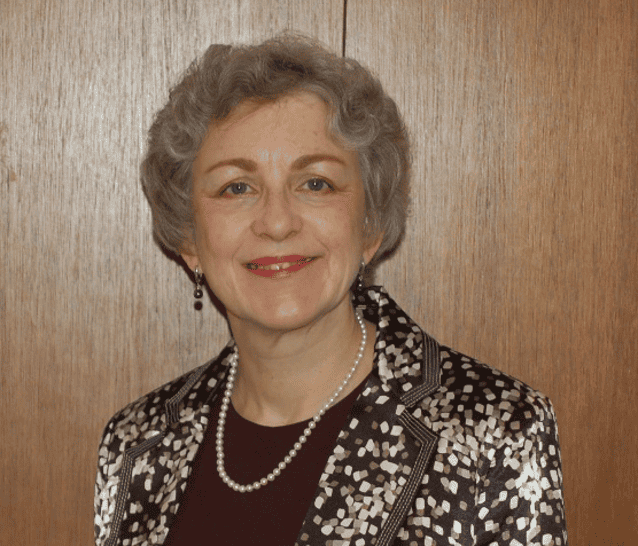
Ruthanne Wrobel is a retired teacher of History and Literature based in Toronto. She holds degrees in political science and education from the University of Toronto and from Syracuse University.
Ruthanne was appointed in 2014 as The Initiative’s first official academic associate. She also has the distinction of being the most recent Board member, joining in January 2026.
An independent scholar, her work explores cognitive tools that enhance teaching and learning within a media ecology framework. Influenced by the Toronto School—particularly Northrop Frye, Marshall McLuhan, and Abraham Rotstein—she examines pattern recognition across disciplines to illuminate connections between media, culture, and imagination.
Ruthanne was appointed in 2014 as The Initiative’s first official academic associate. She also has the distinction of being the most recent Board member, joining in January 2026.
Description
Avian subjects as message senders proliferate in communication history. Meaningful moments between humans and birds abound in literature and in life. While doves are beloved, many people loathe pigeons. Long before Noah, mariners carried birds aboard ships, relying on their homing instincts to find land. The most famous pigeon in World War Two was G.I. Joe. When British forces lost radio contact with troops in Italy, they secured key words to a bird’s leg as their last hope. Flying twenty miles in twenty minutes, both bird and message reached American bombers in time to cancel an air raid against Allies. Through biblical and historical accounts, artistic expressions and current events, this work honours the moniker that Marshall McLuhan gave to himself and to residents of Winnipeg, namely ‘Winnipigeons.’
Ruthanne has also graciously stepped up to the plate and will make a presentation about who was/is Marshall McLuhan. This educational session will be made to a largely Winnipeg audience at the upcoming Annual General Meeting of the Manitoba Historical Society to be held at 1:30 p.m. on Sunday, June 28 in Room 3C12, U. of W., immediately following the MEA Convention. For all and sundry who are already in the vicinity (especially those who will have attended the Convention) The Initiative cordially invites you to come out and support Ruthanne by your presence.
Marshall McLuhan’s French-language Galaxy
MEA Convention Session “McLuhanisms 2.5.1, Fri. June 26, 4 to 5:15 p.m., EG Hall, 3rd Floor, Centennial Hall

About the Presenter
Dr. Jonathan Slater is a veteran communication industry professional and professor emeritus of public relations at the State University of New York, Plattsburgh, directing both its Ethics Institute and Jewish Studies program. He is writing a book about television’s effects on Québec in the years between the Quiet Revolution and the October Crisis.
Other research interests include the mediation of Leonard Cohen’s posthumous celebrity and mass media’s role in the modern Jewish experience. Slater has studied in France and the former Soviet Union, and earned his doctorate in media ecology from New York University.
He has been a Board Member of the Marshall McLuhan Initiative (The Initiative) since April 2022.
Description
By the time Marshall McLuhan made his month-long visit to Montreal during Expo 67, his ideas had been gaining ground in Québec and attracting a great deal of attention from francophone news outlets and a handful of influential Québec elites. McLuhan’s philosophy also appealed to leftist ideologues and separatist circles in Québec, including René Lévesque, the future founder of the Parti Québécois. Montréal French-language dailies, La Presse and Le Devoir, diligently covered McLuhan’s visit and the launch at Expo of the French-language version of McLuhan’s 1962 work, The Gutenberg Galaxy.
Le Devoir first took notice of McLuhan in 1965, when literary critic Naïm Kattan conducted an interview with him at the University of Toronto’s Faculty Club. Kattan recognized that part of McLuhan’s appeal was that he spoke to a new cultural elite no longer content to accommodate the reality of modern industrialized society. Kattan considered McLuhan the intellectual comet of Canada. He lamented that McLuhan’s works remained largely invisible to francophone intellectuals in the province and that McLuhan was not better known in French-speaking Canada.
While there had already been a French publication of McLuhan’s seminal text, Understanding Media, the initial translation was produced in France, not North America. The French-language release of The Gutenberg Galaxy in the summer of 1967 — with McLuhan present — was therefore auspicious. It was the first French translation of a work by McLuhan carried out entirely in Québec.
The Best of Times, The Worst of Times: Defining the Paradoxical Reality of AI
MEA Convention Session “How to Use All 1.4.3, Sat. June 27, 4 to 5 p.m., 1A10 Ashdown Hall
About the Presenter
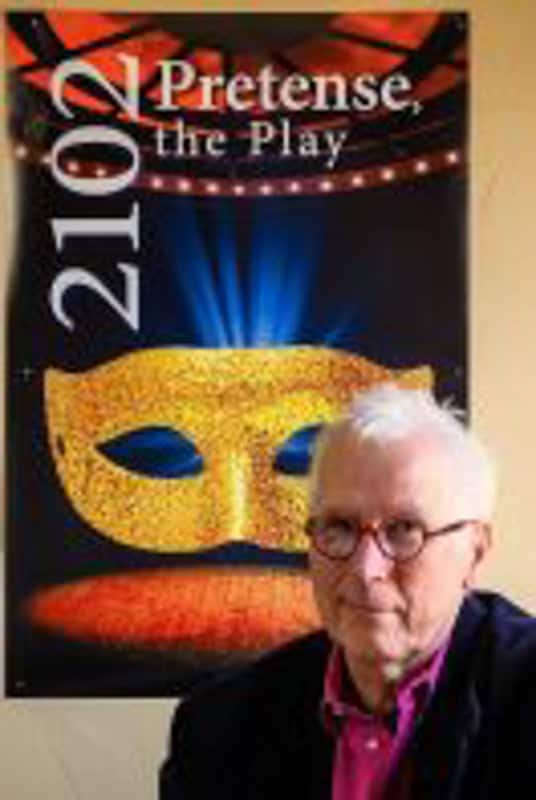
Novelist William E. Jefferson holds an MTh in Theology and Media from the University of Edinburgh and an MA in Communication from the Wheaton Graduate School. Jefferson has a passion for Scripture, world mission, and media ecology, and has served on numerous committees in these disciplines, travelling the world over in these capacities.
As author, he won the Media Ecology Association’s 2022 Mary Shelley Award for Outstanding Fiction for the audio adaptation of his 2021 novel, Presence, the Play, featuring 22 actors (an award shared with Sue Zizza, Producer). In 2024, he was presented with the MEA Convention Top Paper Award (shared). The next year, the novelist was again honored with the Mary Shelley Award, this time for his work, 2102: Pretense, the Play.
Bill has served as a Board Member of The Initiative since January 2023.
Description
We live in an age of paradox, in which Ph artificial intelligence opens staggering vistas of technological possibility while simultaneously siphoning away the embodied presence that sustains authentic relationships. Nearly any device will do — no borders to cross, no maps or territories to conquer, no yellow brick roads to navigate.
Unlike Oz’s wizard behind the curtain, whose levers and smoke sustained illusion, today’s chatbots employ language, code, and tabulation with spellbinding effect — a form of discarnate wizardry that captivates incarnate minds. This essay argues that AI has inaugurated a new form of orality. Beyond the original orality of pre-literate societies and the ‘secondary orality” identified by Walter Ong, a third mode has arisen: the Discarnate Tertium. An orality without breath, lips, or body-language severed from its incarnate ground.
The cultural milieu of today, for better or worse, mirrors the Roaring Twenties, when spectacle, technological enchantment, and rapid social transformation dazzled society before collapsing into crisis. The Al-driven 2020s echo this rhythm: an irresistible rush toward invention, synthetic language, and algorithmic intimacy.
Technological advancement fosters an equally irresistible urge to embrace what technology fashions and forms. Thus, voices of caution are routinely drowned out by the euphoric zeal of AI proponents. The paradox of AI-what it gives and what it takes away-is examined here through theological, philosophical, and media- ecological perspectives, via the lens of human worth.
Marshall McLuhan at Home in Winnipeg
MEA Convention Panel 2.3.2, Fri. June 26, 1 to 2:15 p.m., Dean’s Conference Room 3C12

About the Presenters
Howard R. (J.) Engel and Esther Juce currently serve as the Executive Director and Co-Treasurer, respectively, of The Marshall McLuhan Initiative Inc. The Initiative now owns the most significant Winnipeg childhood home of Marshall McLuhan, 507 Gertrude Avenue, where he grew up from 1920 to 1934, the longest he lived anywhere in his life.
Howard founded The Initiative in 2007, then called “The McLuhan Focus in Catholic Studies,” when it was affiliated with St. Paul’s College for its first decade (2007–2017). The change to the current appellation came about in January 2011 as a re-branding that was part of preparations to attend the McLuhan Centenary celebrations at the University of Toronto that summer.
Esther had piqued Howard’s interest in McLuhan through giving him the book The Essential McLuhan (1995) edited by Eric McLuhan and Frank Zingrone, as a birthday gift in 1998. This interest blossomed into a desire to learn more and to extend McLuhan’s work when Engel encountered the following anecdote in Understanding Me (2003):
If anyone wished to see MM, they would have to work around his daily attendance at Mass at St. Basil’s Roman Catholic Church, St. Michael’s College, U. of T. So, McLuhan was not only the garden-variety pubic intellectual – he was a man of faith! This fact was crucial to both Howard and Esther.
Description
Although Marshall McLuhan died in 1980, his legacy lives on. McLuhan’s most significant childhood home is situated at 507 Gertrude Avenue in Winnipeg’s Osborne Village, where he lived from 1920 to 1934. In 2025, The Marshall McLuhan Initiative Inc. acquired 507 Gertrude Avenue, which they are transforming into The Marshall McLuhan Centre.
The panel will discuss the background behind the acquisition of 507 Gertrude, the major renovations that will be taking place, and the Initiative’s strategic vision for the future centre. In addition, members of the project’s building committee will be present to respond during the question-and-answer period.
Howard and Esther will be panelists along with Jonathan R. Slater, Professor Emeritus, SUNY Plattsburgh, members of The Marshall McLuhan Initiative Inc., all.
A Special Note of Thanks
to Jaqueline McLeod Rogers, PhD
for Her Leadership in the Exploration into and Extension of the Ideas of Marshall McLuhan, and for Convening the 27th Media Ecology Convention in Winnipeg

Jaqueline McLeod Rogers (Ph.D.) is a Professor in the Department of Rhetoric, Writing, and Communication at the University of Winnipeg, teaching about place, writing and rhetoric, and nonfiction. Her interests are diverse: While specializing in communication, she has also worked in the fields of media ecology, feminism, the environment, and urban studies, and is recognized as a leading scholar in studies of Marshall McLuhan. She is certainly well published. Her titles include:
- Finding McLuhan: The Mind, the Man, the Message (2015)
- “McLuhan and the Arts”
- Imaginations (a special issue in 2018)
- McLuhan’s Techno-sensorium City: Coming to Our Senses in a Programmed Environment (2020)
- Crises Then as Now: Marshall McLuhan, with Urbanist Jaqueline Tyrwhitt and Artist Gyorgy Kepes (2025)
The list continues with numerous articles as well as co-authored books and textbooks. In addition to teaching courses full time, Dr. McLeod Rogers has organized conferences and presented many lectures at academic conventions. McLeod Rogers has received a number of accolades, including The Lewis Mumford Award for Outstanding Scholarship in Ecology of Technics (2021), and The Walter Benjamin Award for Outstanding Article from the Media Ecology Association (2022). She currently serves on the Editorial Boards of Explorations in Media Ecology and of The Senses and Society.
Her perspectives on Marshall McLuhan are cutting-edge. She sees him as an activist and a multi-disciplinary speculative urbanist. She maintains that McLuhan’s percepts about the effect of media on the human condition include the alteration of human perception. McLeod Rogers posits that this principle is the foundation of a sustainable future based on collective participation in a responsive urban environment.
Jaqueline, or Jaque as she is known to The Initiative, has been most supportive and encouraging to this group’s own media ecology explorations through the years. As far back as October 2010, she welcomed the late Richard J. Osicki, first Co-Director of The Initiative, and Howard to the major conference she hosted at the U of W, “Marshall McLuhan in a Post-Modern World: Is the Medium the Message?” There the Co-Directors met Dr. Robert K. Logan, one of the two keynote speakers at the conference. Bob invited them to the McLuhan centenary celebrations at the University of Toronto in the summer of 2011, and the rest has been a wonderful journey of discovery ever since. Incidentally, the other guest speaker at this 2010 Winnipeg conference on McLuhan was none other than Douglas Coupland. That spring, Coupland had just released his biography, Marshall McLuhan, part of Penguin’s Extraordinary Canadians series edited by John Ralston Saul. Of course, Howard made a point of purchasing a copy then and there, having Coupland inscribe it. Howard has kept the signed book to this day to include it, among many works, in the fledgling Marshall McLuhan Centre’s nascent research library.
There has been considerable reciprocity between Jaque and The Initiative ever since. McLeod Rogers participated in the McLuhan’s Faith & Works Conference, hosted by The Initiative at St. Paul’s College in October 2015. In January 2018, Howard shared the stage with Jaque at the afternoon symposium “Marshall McLuhan: Winnipeg/World, Global Village/Counter- environment held at Archives & Special Collections U of M. Finally, Jaque delivered the local keynote address at The Initiative’s U. of Manitoba Symposium, “Winnipigeon Homecoming: Marshall McLuhan in Winnipeg 2.0,” held at Archives & Special Collections in May 2024. Her address was entitled, “McLuhan and Home and City Places.” In this keynote, Jacque drew on McLuhan to bring the two strands of culture and ecology together, presenting excerpts from her recent book, Crisis Then as Now: McLuhan with Planner Jaqueline Tyrwhitt and Artist Gyorghy Kepes.
The Initiative cannot thank Jacque and her team at The University of Winnipeg enough for so graciously inviting The Initiative to participate in many and various ways in the 27h Annual Media Ecology Association’s Convention at her home institution, appropriately themed “Crossing fOut] Borders in Our Global Village”. The collaborations have been numerous and smooth, including the pre-Convention bus tour, The Initiative’s full-page ad in the Convention program booklet, the presentations by three Initiative Board Members, and the panel discussion on acquiring MM’s most significant childhood home in Winnipeg at 507 Gertrude Avenue. The Initiative plans to transform the house The Marshall McLuhan Centre, where guests will “Come for the Message and Stay for the Medium.” On top of all this, in spite of her more-than-busy schedule, Jacque went out of her way to ensure that The Initiative could secure the U of W meeting space Room 3C12 at no cost for the Annual General Meeting of the Manitoba Historical Society immediately after the MEA Convention. Very appropriately, in liaising with the media ecology community, the Society has invited The Initiative’s own Ruthanne Wrobel to speak about the giant on whose shoulders we all stand, Marshall McLuhan!
Hats off and kudos to Jacque and her MEA Convention team for their hospitality and for sharing the stage in what promises to be a fondly memorable event!
~Howard R (J) Engel and Esther G. Juce

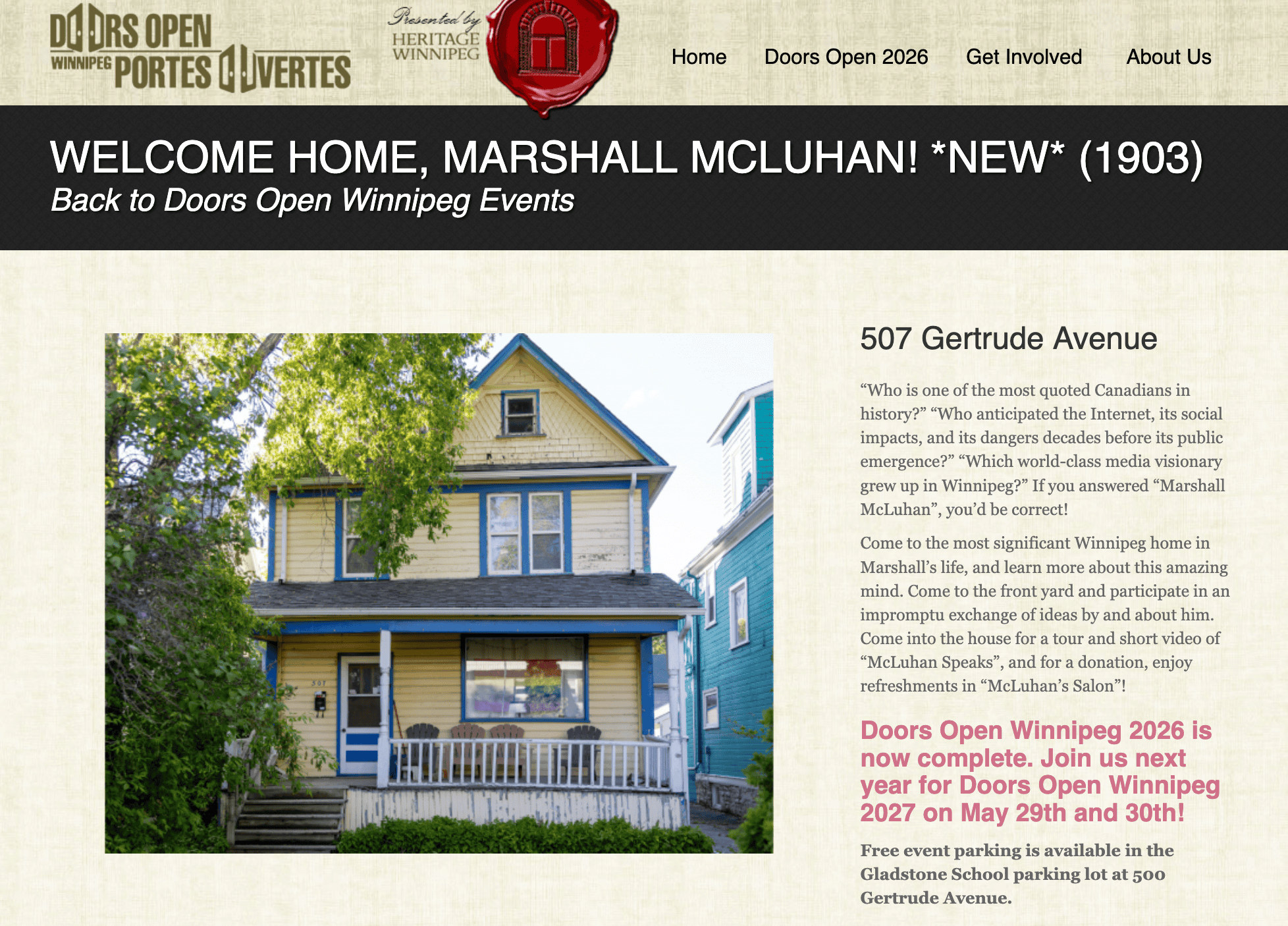
For more information, visit Doors Open Winnipeg
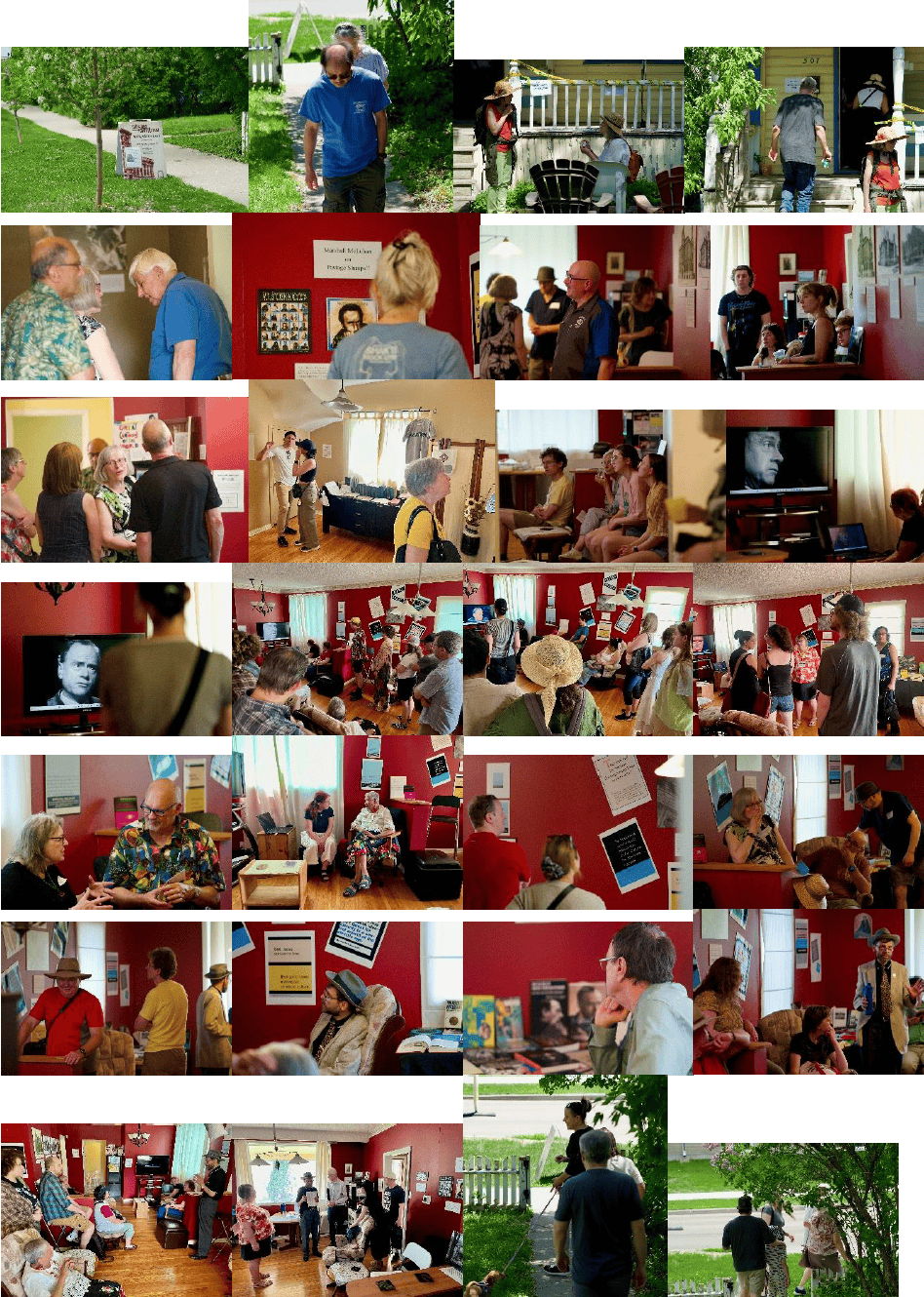
An Evaluation of 507 Gertrude Avenue’s Inaugural Participation in Doors Open Winnipeg Weekend
, May 30-31, 2026: By the Numbers and Beyond
We wish to thank The Initiative’s professional fundraiser, Lawrence Prout, who introduced The Initiative to Cindy Tugwell, Executive Director of Heritage Winnipeg, which is the entity that organizes Doors Open Winnipeg.
The Initiative had originally planned to hold its own open house for the block as a courtesy to inform the immediate neighbours about the plans to transform the humble house at 507 Gertrude into the Marshall McLuhan Centre and the inevitable ensuing construction. However, Cindy’s encouragement and helpfulness convinced The Initiative that participation in Doors Open Winnipeg would accomplish this goal well beyond the initial idea and effort. Sure enough, Doors Open Winnipeg opened the doors of 507 Gertrude up to a much wider audience beyond any expectations. Here are the numbers:
- 16 volunteers (5 assigned by Doors Open and 11 supplied by The Initiative) staffed 11 half- hour sessions both days from 11 a.m. to 4:30 p.m., except for a half-hour break at 1:30 p.m.
- 203 people attended, 78 on the Saturday and 125 on the Sunday, many if not most of whom left their names and e-mail addresses on our sign-up sheet for more information.
- $102.65 in cash was donated ($20.65 on Sat. and $82.00 on Sun.) in our free-will collection box to help defray the cost of refreshments.
More importantly, however, a largely unsuspecting, “McLue-less” crowd was exposed to some of the ideas, charm, and humour of the man speaking on video, and whose aphorisms now grace the walls of 507 Gertrude Avenue. Having experienced the richness of McLuhan’s thought, the crowds left the building a bit more “McLued-in” as a result. The Initiative is particularly grateful for the McLuhan Estate allowing the use of four video clips from its “McLuhan Speaks” collection. These were showed to each group as they came in. These clips comprise a total of 8 minutes, about 6 of which were part of the renowned interview of McLuhan by Robert Fulford originally broadcast by CBC on May 8, 1966 as part of the 50″ and final episode of the controversial news show This Hour Has Seven Days. During this interview McLuhan anticipates the Internet and shares his amazing perspectives on the human condition. The walls inside “McLuhan’s Salon” are now festooned with a panoply of pop-art posters by the late print graphic designer Robert R. Reid that feature quotable quotes from MM. Other walls have vintage photos illustrating where MM attended school, all four of them within walking or biking distance of his residence. (This proximity to the education that shaped the mind of the young Marshall ended for the last two years at The University of Manitoba which closed the Broadway Campus in favour of the Fort Garry Campus.)
To give an idea of the Manitoba public school textbooks he would have used as a student, a sampling of these is now on display in the Museum Room, along with a wooden elementary school student desk.
Finally, the future MM Centre couldn’t help but show off a rich selection of publications both by and about MM acquired since 1998, (or 9 years prior to the formation of The Initiative itself!) that will form the nucleus of the future Marshall McLuhan Centre Research Library.
~Howard R (J) Engel (text only)
Save the Date!
Gala Fundraiser October 8
The Marshall McLuhan Initiative Inc. will be holding its first “Winnipigeon” Gala Fundraiser on Thursday, October 8, 2026. This occasion promises to be an exciting one: It will be all McLuhan, all the time!
The day will begin at 12:00 noon with a complimentary informal lunch. Afterword, T.C. (Teri) McLuhan, author and film-maker and daughter of Marshall, will be screening a teature-length film of her choice and entertaining questions and answers.
Then, at 5:15 p.m., the evening will begin with the dulcet tones of a jazz trio, while our own Jonathan Slater, as Honorary Host, will mingle with the guests as they enter. Michael McLuhan as MC will begin the formal part of the evening and will give the keynote address. The program will also include presentations from the winners of The Media & the Write Award and formal greetings from the University of Manitoba.
All of this is happening at Marshall McLuhan Hall at the University of Manitoba, the first time that there will be two McLuhans at the same event put on by the Marshall McLuhan Initiative Inc. in Marshall McLuhan Hall; the evening will be replete with Marshall arts!
As Howard would say of the nascent Marshall McLuhan Centre at 507 Gertrude Avenue, “Come for the Message; Stay for the Medium!”
~Esther G. Juce